MODERNIZE WITHOUT COMPROMISE | SOLUTION ARCHITECTURE
TURN DISCOVERY INTO A SOLUTION ARCHITECTURE YOU CAN DEFEND
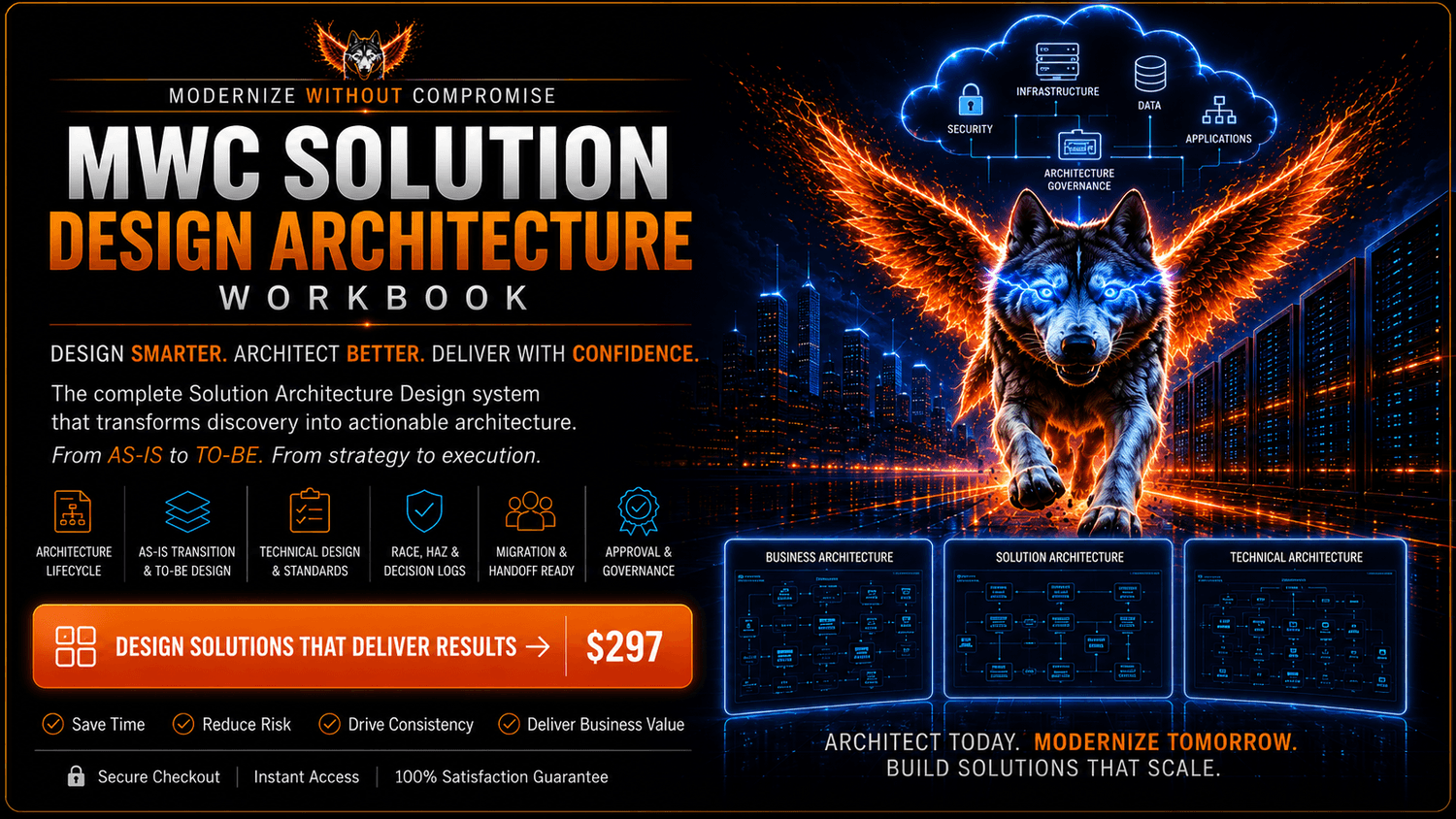
A structured, reusable architecture design workbook for turning requirements into documented decisions, AS-IS, Transition and TO-BE architecture, technical designs, risks, migration handoffs and approvals.
WHAT YOU'RE GETTING
The MWC Solution Architecture Design Workbook is a comprehensive, reusable architecture working system designed to help Cloud Architects, Solution Architects, Enterprise Architects, consultants, and technology teams transform discovery findings into a structured, traceable solution design.
Instead of starting every engagement with scattered notes, disconnected spreadsheets, and blank architecture documents, the workbook gives you a guided framework for moving from business and technical requirements through AS-IS, Transition, and TO-BE architecture—while documenting the decisions, risks, dependencies, technical designs, migration considerations, and approvals that support the solution.
Every major stage connects through a traceability model: Discovery Finding → Requirement → Architecture Decision → TO-BE Component → Risk/Dependency → Migration Handoff → Approval. This helps you show not only WHAT you designed, but WHY the architecture was designed that way.
WHAT'S INSIDE THE WORKBOOK
Architecture Dashboard
Get an executive-level view of requirements, architecture decisions, open risks and dependencies, and migration readiness.
Architecture Overview
Document the project, business outcome, platforms, architecture pattern, current state, transition state, target state, constraints, dependencies, risks, and overall architecture status.
Business Drivers, Success Criteria, Scope & Constraints
Connect technical architecture decisions to the business reasons behind the initiative and clearly define what is—and is not—part of the solution.
Design Requirements & Traceability
Transform discovery findings into measurable architecture requirements and connect those requirements directly to architecture decisions and target-state components.
AS-IS Architecture
Document the current environment and its applications, infrastructure, technologies, dependencies, network zones, locations, and component relationships.
Transition Architecture
Capture the temporary and hybrid architecture required while workloads move between the current and target environments.
TO-BE Architecture
Define the approved target-state components and connect them back to the requirements and decisions that drove the design.
Three MWC Architecture Diagram Examples
Use dedicated AS-IS, Transition, and TO-BE architecture examples as visual references when developing your own project-specific architecture.
Application & Integration Design
Document application tiers, interfaces, protocols, ports, source/destination relationships, dependencies, availability requirements, and security requirements.
Infrastructure & Platform Design
Capture compute and platform decisions including operating systems, runtime, sizing, CPU, memory, storage, scaling, and management tooling.
Network & Connectivity Design
Design VPC/VNet structures, subnets, CIDRs, routing, DNS, hybrid connectivity, firewall requirements, ports, and protocols.
Security & IAM Design
Document identity, authentication, authorization, encryption, logging, monitoring, compliance mappings, and security controls.
Data, Database & Storage Design
Capture database technology, data classification, capacity, performance, replication, backup, retention, encryption, and residency requirements.
HA, DR & Resiliency Design
Define criticality, availability targets, RTO, RPO, high-availability patterns, disaster-recovery patterns, failover, testing, and monitoring.
Architecture Decision Register
Document major architecture decisions, alternatives considered, selected options, rationale, trade-offs, ownership, and approval status.
RAIDE & Dependency Register
Track Risks, Assumptions, Issues, Dependencies, and Exceptions that can affect architecture and delivery.
Architecture-to-Migration Handoff
Translate the approved architecture into migration-planning inputs—including migration strategy, recommended waves, prerequisites, dependencies, testing, recovery requirements, rollback considerations, and readiness.
Approval & Sign-Off
Create a documented governance trail for architecture reviews, conditions, decisions, evidence, and final approval.
Built-In Sheet Guide
Every major worksheet explains its purpose, what information belongs there, its key components, and an example—so users aren't handed a complex workbook and expected to figure it out themselves.
DON'T JUST DOCUMENT THE ARCHITECTURE. BUILD THE DECISION TRAIL BEHIND IT.
Great solution architecture is more than a diagram. It's the documented connection between what discovery uncovered, what the business requires, the decisions you made, the target solution you designed, the risks you identified, and what the migration team needs to execute.
The MWC Solution Architecture Design Workbook brings that process together in one reusable framework—helping you design with greater consistency, communicate with greater clarity, and move from discovery to implementation with a documented architecture trail.
Then, immediately above the button, I'd add four short value statements:
SAVE TIME — Start with a structured architecture framework instead of building your process from scratch.
REDUCE RISK — Surface requirements, dependencies, architecture decisions, HA/DR needs, constraints, and migration considerations before execution.
DRIVE CONSISTENCY — Apply a repeatable architecture methodology across applications, projects, and client engagements.
DELIVER BUSINESS VALUE — Connect technical decisions back to requirements, business outcomes, governance, and migration readiness.
WHO THIS WORKBOOK IS BUILT FOR
Cloud Architects
Turn assessment and discovery findings into documented cloud architecture decisions, target-state components, resiliency requirements, and migration-ready designs.
Solution Architects
Create a repeatable structure for connecting business requirements, technical requirements, integrations, infrastructure, security, data, and architecture decisions.
Enterprise Architects
Improve traceability between business drivers, technology decisions, architecture standards, dependencies, governance, and strategic outcomes.
Cloud & Technology Consultants
Bring a structured architecture framework into client engagements instead of rebuilding your design process from scratch for every project.
Technical Leads & Senior Engineers
Organize technical requirements and design decisions as responsibilities expand beyond individual technologies into end-to-end solution design.
Professionals Moving Into Architecture Roles
Learn how the different pieces of a real architecture engagement connect—from discovery and requirements through design decisions, target architecture, risks, migration handoff, and approval.
BUILT FOR REAL ARCHITECTURE WORK—NOT JUST DIAGRAMMING.
Whether you're designing a cloud migration, modernization initiative, hybrid architecture, or enterprise technology solution, the workbook gives you a repeatable framework for documenting how the architecture was developed and preparing it for implementation.
Built with systeme.io | Privacy policy | Legal | Terms and conditions